

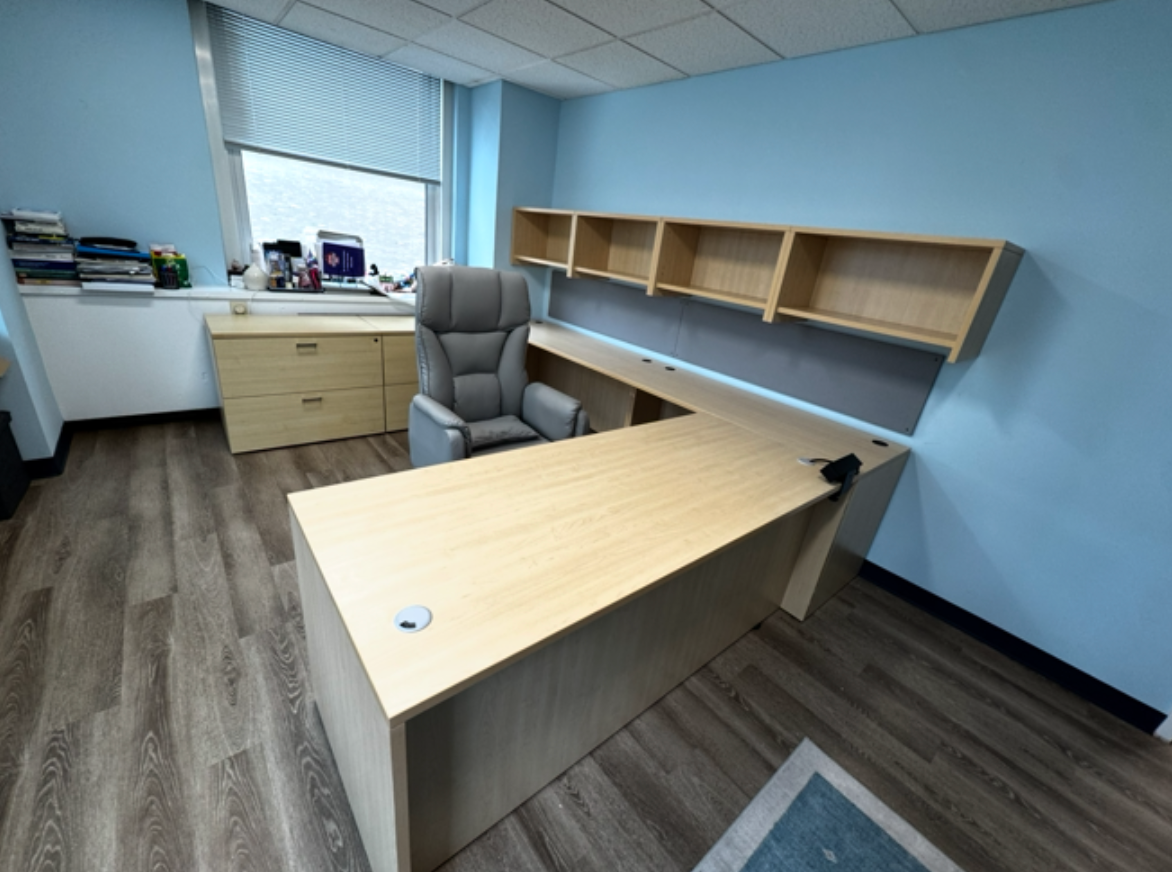
Ergonomic office furniture can make the workplace more comfortable and practical. Adjustable desks, chairs, and accessories can support better posture, easier movement, and more comfortable working positions.
If your current furniture is uncomfortable or you are updating your office, ergonomic options can be a practical choice. The right furniture can also make workstations easier to use and better suited to different employees.
In this article, we’ll explain the business benefits of ergonomic office furniture, what to look for when choosing it, and how to plan an office furniture upgrade.
What Is Ergonomic Office Furniture?
Ergonomic office furniture is designed to make work more comfortable. It can be adjusted to better fit the person using it. Common examples include adjustable chairs, sit-stand desks, monitor arms, and keyboard trays.
An ergonomic chair may allow adjustments to seat height, armrests, lumbar support, seat depth, and backrest position. A height-adjustable desk can also give employees the option to change their working position during the day. These features make it easier to set up a workstation around the person.
Furniture still needs to suit the type of work being performed and the size of the office. When choosing new office furniture for your business, it helps to consider function, dimensions, durability, and adjustability together.
What Business Benefits Can Ergonomic Office Furniture Provide?
Ergonomic office furniture can support employee comfort, focus, workplace flexibility, and more practical use of each workstation. These benefits come from creating work areas that are easier for employees to adjust and use throughout the day.
It Can Improve Employee Comfort
Better comfort is one of the most immediate benefits of ergonomic furniture. Employees who can adjust their chairs, desk heights, arm supports, and equipment positions have more control over how their workstations feel. This can reduce the need to lean, stretch, or shift position repeatedly.
Comfort becomes especially important for employees who spend much of the day working at a desk. Small issues such as a chair that sits too low or a monitor positioned at an awkward height can become distracting over several hours.
A well-planned workstation also shows that the office has been set up with daily use in mind. That can help create a more functional working environment.
It Can Support Better Focus and Productivity
A comfortable workstation can make it easier for employees to concentrate on their tasks. An employee who is constantly repositioning a chair, adjusting a monitor, or working around limited desk space may lose focus throughout the day.
Ergonomic furniture can also make frequently used tools easier to reach and operate. A properly sized desk can provide enough room for monitors, keyboards, documents, and other equipment without creating unnecessary clutter.
Productivity does not depend on furniture alone, but the physical workspace plays a role in how easily work gets done. A practical workstation allows employees to focus more on the task at hand.
It Can Support Better Workstation Habits
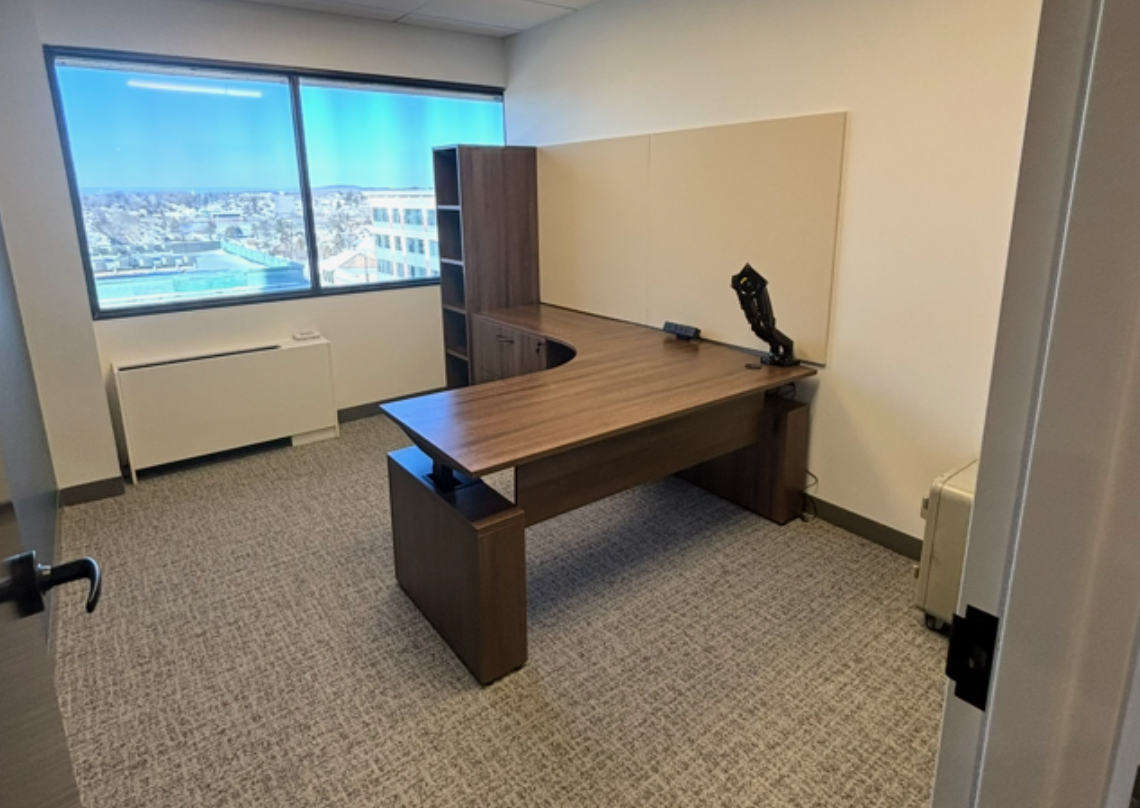
Ergonomic furniture can encourage employees to use workstations in ways that place less strain on the body. Adjustable seating can support a more suitable sitting position, and properly placed monitors can reduce the need to repeatedly look down or turn the head at an awkward angle.
Height-adjustable desks can also give some employees the option to change positions during the day. This can add variety to desk-based work instead of keeping the body in one fixed position for several hours.
Ergonomic furniture cannot prevent every ache, discomfort, or workplace injury. It can, however, address common workstation problems such as limited back support, poor desk height, cramped leg space, and awkward equipment placement.
It Can Make Workstations More Flexible
Adjustable furniture can serve multiple employees by accommodating different body sizes and working preferences. This is useful in offices with shared desks, flexible seating arrangements, or workstations that may be reassigned.
Flexible furniture can also make future office changes easier to manage. If departments are reorganized or employees move to new work areas, adjustable desks and chairs may be easier to reuse than fixed furniture.
This can give businesses more options when planning future growth. Furniture that works in several configurations can continue to serve the office as needs change.
How Can Ergonomic Furniture Improve the Use of Office Space?
Ergonomic furniture can improve office space when product dimensions and layout are considered together. A chair with several adjustment features will not work well if there is too little room to move it, and a large desk may create problems if it blocks circulation through the office.
Good planning takes into account workstations, storage, walkways, meeting areas, shared equipment, and employee movement. Looking at these elements together can help prevent overcrowding and reduce situations where furniture needs to be moved after installation.
Our office space planning consultants for business workspaces can help align furniture choices with how your office is used. Planning the layout before ordering furniture can make it easier to choose suitable desk sizes, workstation configurations, storage options, and seating arrangements. It can also help account for future hires, shared equipment, and changes in how teams use the office over time.
What Should You Look for in Ergonomic Office Furniture?
Adjustability should be one of the first features you consider. An office chair can offer controls for seat height, armrest height, seat depth, lumbar support, and backrest position. A desk may provide height adjustment or sufficient clearance for employees to position themselves comfortably.
The furniture also needs to fit the workstation. Consider the space needed for monitors, keyboards, phones, paperwork, and other equipment. It is also useful to check legroom, cable placement, storage requirements, and the chair’s mobility.
Durability matters because office furniture is usually expected to stay in service for years. Adjustment controls should also be easy to understand and use. A practical balance of comfort, durability, usability, and cost can help you choose furniture that suits daily business needs.
Is Ergonomic Office Furniture Worth the Cost?
Ergonomic furniture can be worth the cost when it matches employees’ needs and the work being performed. The value comes from providing workstations that are more comfortable, adaptable, and practical to use. Adjustable products can also continue to serve the business as employee or workstation assignments change.
Buying solely on the lowest initial price can lead to additional costs later. An uncomfortable chair or a desk that does not accommodate the equipment may need to be replaced sooner than planned.
You also do not need the same furniture at every workstation. Employees who spend most of the day at a computer may benefit from more adjustable seating or height-adjustable desks, whereas meeting rooms and short-use spaces may require simpler solutions. Matching the investment to how each area is used can help control the furniture budget.
How Can Businesses Introduce Ergonomic Furniture Gradually?
Businesses do not need to replace every desk and chair at once. A gradual approach can make the cost easier to manage and help identify which upgrades are most useful. You can start with employees who spend most of their day working at a desk.
Another option is to replace older or worn furniture first. Chairs with limited adjustment, desks that no longer suit the equipment, or workstations that feel cramped can be good places to begin. This allows you to address problem areas without changing the entire office at once.
You can also upgrade one department or work area at a time. This gives you a chance to see how the new furniture works before making larger purchases. The results can then guide future furniture decisions across the office.
How Should You Plan an Ergonomic Office Furniture Upgrade?
Start by reviewing the problems in your current workspace. Look at areas where desks feel crowded, chairs offer limited adjustment, equipment does not fit comfortably, or storage interferes with movement. This gives you a clearer idea of which changes should receive the most attention.
Next, consider the entire office rather than replacing individual items without considering the layout. Desk dimensions, chair movement, technology, storage, walkways, and shared spaces all affect how well the furniture functions once installed.
We can help with office planning, furniture sourcing, delivery, assembly, and installation. Keeping these parts of the project connected can make it easier to choose furniture that fits the space and have it installed in the planned location.
How Can Your Office Connection Help With Your Furniture Project?
The right ergonomic office setup should work for your employees, your available space, and the way your business operates. Adjustable chairs and desks can make a difference, but selecting the right furniture and placing it correctly is just as important. Good planning helps turn individual furniture purchases into a workspace that functions as a whole.
At Your Office Connection, we help businesses with office furniture, space planning, delivery, installation, and relocation needs. As a local, family-owned company, we take a hands-on approach to each project and serve businesses in Chester County, Delaware County, and Northern New Castle County.
If you are planning new workstations, adjustable seating, sit-stand desks, or a larger office furniture project, contact Your Office Connection for office furniture and space planning. We can help you choose and plan furniture based on how your team uses the office.